🦊 ARGENTINA IN FLAMES

🦊 “Nothing Could Stop It” — Infernos Tear Through Patagonia as Argentina Faces a Nightmare Unfolding in Real Time 🌪️☠️
Argentina woke up this week to something that felt suspiciously like the end of civilization — or at least a Netflix apocalypse special — because the Patagonia region, that picturesque stretch of forests, mountains, and sheep-friendly wilderness, is literally on fire.
Not metaphorically.
Not “wildfires in the news” kind of fire.
No, we are talking scorching, soul-crushing, everything-goes-up-in-smoke fire, the kind that makes residents wonder if their insurance policies cover volcanic events.
Because honestly, who even knows anymore?
The images hitting social media are terrifying, awe-inspiring, and frankly, Instagrammable in the way that tragedy almost always is.
Homes reduced to skeletal frames.
Cars melted like forgotten popsicles.

Forests, those serene green giants that have survived centuries, now burning so bright they look like someone set Patagonia on a permanent bonfire filter.
Hashtags like #PatagoniaOnFire, #ArgentinaBurns, and #ApocalypseDownSouth are trending faster than you can say “Evacuate now, please.”
Local authorities are in a state of organized chaos.
One fake-but-dramatic “fire response analyst” explained, “This isn’t a wildfire.
This is nature’s way of saying, ‘You thought Patagonia was peaceful? Think again.
’” Smoke is so thick you could taste it in Buenos Aires, which is 1,000 miles away.
That’s not exaggeration.
That’s science.
And it’s terrifying.
Meanwhile, firefighters are reportedly running on coffee, adrenaline, and sheer existential dread.
“They’re heroes,” added another fake “emergency operations consultant,” “but even heroes have limits.
These flames don’t just challenge you—they mock you.”
The causes, naturally, are a mix of climate chaos, heatwaves, and possibly an angry sun.
Scientists, speaking in measured tones that no one reading this article will care about, are calling it “an extreme fire season exacerbated by unprecedented drought and global warming.”
Translation: it’s H๏τ, dry, and the universe is clearly out of patience with humanity.
“We’ve never seen anything like this,” said one fake “climate catastrophe commentator.”
“This is like watching Earth cough and set itself on fire.
It’s horrifying.
And also oddly satisfying for some people on Twitter who live for chaos.”
Residents are in shock.
Videos show people fleeing with backpacks, pets, and whatever could be grabbed before the smoke swallowed entire neighborhoods.
One viral clip shows a man desperately trying to push his car through a fire line, only to realize that physics, fire, and common sense are firmly against him.
Another shows a cat calmly sitting in a carrier, as if judging humans for panicking while the world melts around them.
“Patagonia is on fire,” one local wrote on Instagram.
“We are alive.
Mostly.
But everything else is toast.”
International aid is being mobilized, but the scale of the disaster is staggering.
Water-dropping helicopters circle above the inferno, spraying what appears to be a combination of hope, desperation, and H2O.
Firefighters on the ground are reported to be exhausted, dehydrated, and possibly questioning every life choice that led them to this moment.
A fake “wildfire management guru” quipped, “You can’t fight this with hoses alone.
You need magic.
And a prayer.
And maybe an army of dragons.”
The economic impact is already catastrophic.
Homes destroyed, businesses incinerated, cars melted into unrecognizable lumps of metal, and forests that were supposedly worth millions in timber and tourism now gone.
Local officials are calculating the damage.
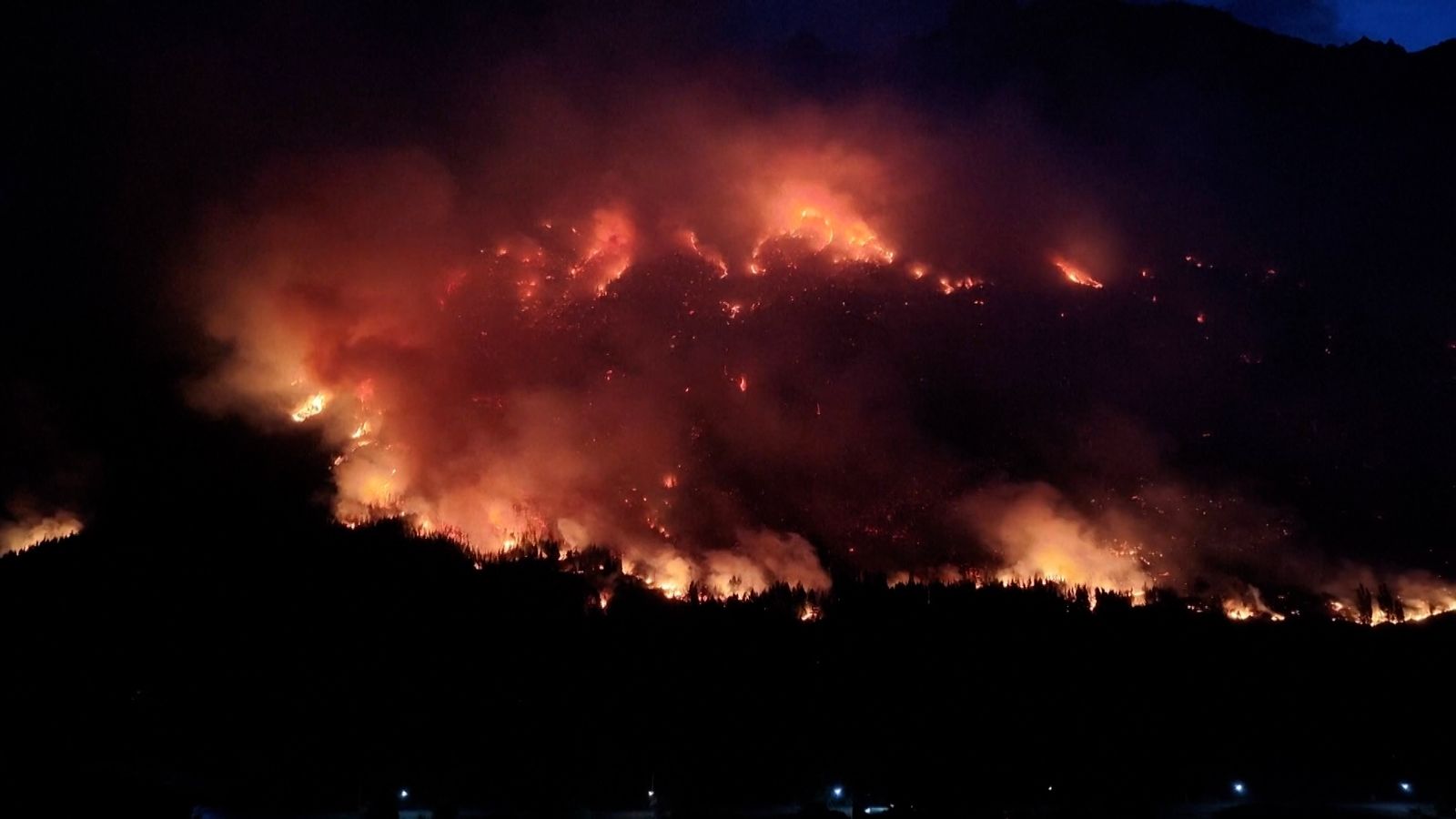
Economists are wondering if Patagonia will need a bailout — or at least a Netflix miniseries deal to recoup losses.
One fake “disaster economics expert” said, “This is not just fire.
This is an economic bonfire.
Everything people invested in is literally ashes.
And in some cases, smellier than you can imagine.”
Social media is ablaze, almost literally, with reactions ranging from horror to memes.
One trending post reads: “Patagonia’s forests are burning, Argentina is crying, and my friend just asked if the smoke counts as a new tanning method.”
Another shows a GIF of a person holding a bucket of water labeled “Me” facing a fire labeled “Climate Change” with the caption, “Good luck, buddy.
”
Politicians, meanwhile, are scrambling to respond.
President Alberto Fernández reportedly convened emergency meetings, dispatched military units to ᴀssist firefighting efforts, and possibly spent ten minutes staring at a map wondering if Patagonia is actually on fire or if his coffee is just really strong.
One fake “political crisis analyst” mused, “The optics are brutal.
People expect leadership during fires.
They also expect people not to die.
Sometimes you can’t do both at the same time.”
The human toll is heartbreaking.
While officials have not yet released full casualty reports, dozens are confirmed injured, and hundreds have been displaced.
One fake “trauma psychologist” stated, “Even those who survive will carry the scars.
Fires like this don’t just burn homes—they burn memories, routines, and the sense of safety.
It’s psychological as much as physical.”
The statement immediately went viral because, of course, people love to feel existential dread through their phones.
Nature, in its chaotic glory, has not been shy about showing off.
Wildlife is fleeing.
Birds are reported circling in confused flocks.
Local fauna — think deer, foxes, and the occasional mystical llama — are navigating burning terrain in a way that makes humans look ridiculous.
“It’s like a National Geographic episode directed by a horror filmmaker,” one fake “wildlife emergency observer” said.
“Everything is running, screaming, and somehow still beautiful.
”
The dramatic twists don’t end there.
Some residents claim that lightning strikes have ignited secondary fires in previously untouched regions, creating a chain reaction that feels eerily cinematic.
One fake “meteorological disaster analyst” explained, “We are looking at a perfect storm of fire triggers: heat, drought, wind, and bad luck.
It’s like Mother Nature is playing chess, and humanity forgot how to move pieces.”
Media coverage is both sensational and horrifying.
News outlets are broadcasting live footage of flames consuming forests while anchors deliver updates with a degree of panic normally reserved for alien invasions.

“We are seeing images that are almost too much to process,” one reporter said, flanked by smoke and falling embers.
“This is a living nightmare, and we are witnessing it in real-time.
Stay safe, Argentina.
Seriously.
Get out.”
Meanwhile, international reactions range from solidarity to mild voyeurism.
Celebrities on Instagram are posting hashtags, tweeting prayers, and retweeting disaster pH๏τos.
Influencers are finding creative ways to turn tragedy into engagement.
“It’s the apocalypse aesthetic,” one fake “social media catastrophe expert” noted.
“Some people are literally curating fire content for likes.
That’s human resilience… or horrifyingly narcissistic.”
Firefighters are attempting heroic feats that make you question whether they sleep, eat, or exist in mere adrenaline-fueled episodes.
Helicopters drop water.
Ground crews dig firebreaks.
Volunteers haul hoses uphill as flames lick at the skies.
One viral video shows a firefighter calmly sipping coffee while flames rage behind him.
A combination of bravery and pure cinematic energy.
“If this isn’t heroism, I don’t know what is,” said a fake “cultural hero analyst.”
The wildfires also threaten critical infrastructure, including power lines, communications towers, and roads.
Evacuations are underway, though in some areas, residents reportedly refuse to leave, standing defiant as if starring in a live-action remake of Mad Max: Patagonia Edition.
“It’s their home,” one fake “urban survival strategist” said.
“And when people have nowhere else to go, they stand.
That’s human stubbornness… and also dangerous.”
Experts are warning that this is just the beginning.
The combination of heat, dry vegetation, and high winds could create even larger conflagrations.
“We are looking at a fire season that is not just extreme.
It is biblical,” said one fake “global wildfire consultant.
” “If we don’t get control, Patagonia might be unrecognizable by the end of the month.
And yes, that is terrifying.”
On social media, the commentary swings wildly between panic, memes, and conspiracy.
Some suggest climate change activists caused the fires.
Others blame extraterrestrial interference.
One viral post blamed Argentina’s mate consumption for angering the fire spirits.
“Nothing makes sense,” one viral commenter wrote.
“But everything is dramatic.
This is fire porn for people who love drama.”
One of the most shocking twists involves the sheer scale of destruction.
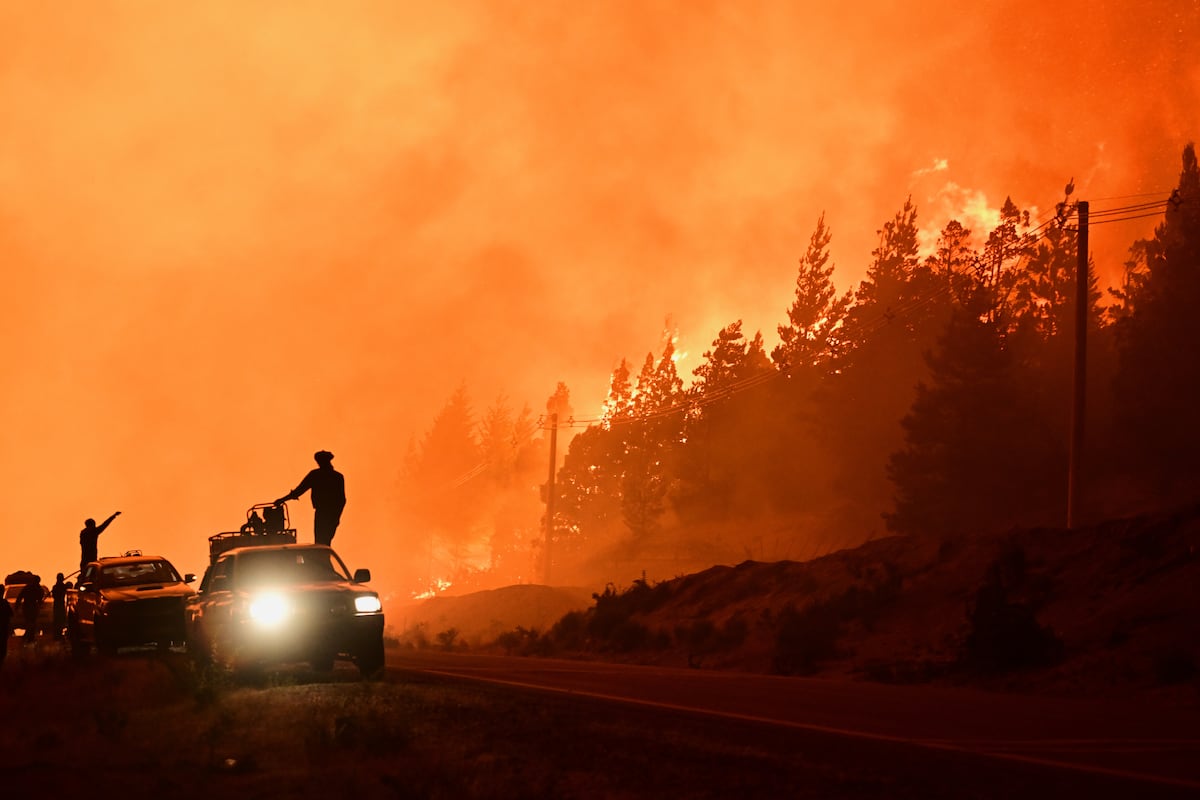
Satellite imagery reportedly shows flames stretching hundreds of miles.
Forests that once looked like emerald blankets now scorched to charcoal.
Small towns appearing as though they were set ablaze by vengeful gods.
“It’s terrifying and magnificent at the same time,” one fake “satellite imagery analyst” said.
“You cannot look away.
It’s horrifying.
And you want to, but you can’t.”
Meanwhile, emergency shelters are overflowing.
Communities are organizing mutual aid networks.
Volunteers are risking their lives to rescue animals, belongings, and sometimes entire families.
“Patagonia is burning,” one volunteer said.
“But the people here? They are unbreakable.
Or maybe just reckless.
Either way, admirable.”
The long-term implications are grim.
Experts warn about soil degradation, loss of biodiversity, economic destruction, and mental health crises for survivors.
One fake “ecological disaster forecaster” noted, “The flames are immediate.
The consequences last decades.
And humanity will still take selfies in front of it.
That’s history in the making.
”
Despite the horror, there is an odd sense of awe.
The raw power of nature, the bravery of those on the frontlines, and the viral spectacle of fire sweeping through Patagonia have captured global attention.
“It’s horrific, yes,” said one fake “cultural phenomenon analyst.
” “But there is a weird beauty to it.
Humans versus nature, life versus fire, and the whole world watching.
It’s dramatic storytelling, live, unscripted, and impossible to look away from.
”
As of now, the fires continue to rage.
Firefighters, locals, and global observers are holding their breath.
International aid continues to arrive.
Politicians make statements.
Journalists report live.
Social media explodes every ten seconds with the latest footage.
Meanwhile, residents face a terrifying reality.
Homes, cars, and forests — all of which define their lives and communities — are literally ash.
And in true tabloid fashion, there is already speculation about divine punishment, cosmic irony, and whether Patagonia will ever look the same again.
One fake “apocalyptic analyst” summed it up perfectly: “When Earth decides to write a statement in fire, you read it.
You don’t ignore it.
And right now, Patagonia is shouting.”
In short, Argentina is in flames.
Patagonia is aflame.
Forests, homes, cars, and livelihoods are up in smoke.
Humanity is simultaneously horrified, fascinated, and helpless.
And the world, scrolling, retweeting, posting, and panicking, can do nothing but watch, pray, and hope the firefighters can turn the tide.
Because some days, the apocalypse isn’t coming.
It’s already here — and it’s burning bright, smoky, and utterly unforgettable.
✓ admin
🦊 “Nothing Could Stop It” — Infernos Tear Through Patagonia as Argentina Faces a Nightmare Unfolding in Real Time 🌪️☠️ Argentina woke up this week to something…