
The reported professional complaint therefore adds another layer to an already complicated situation.
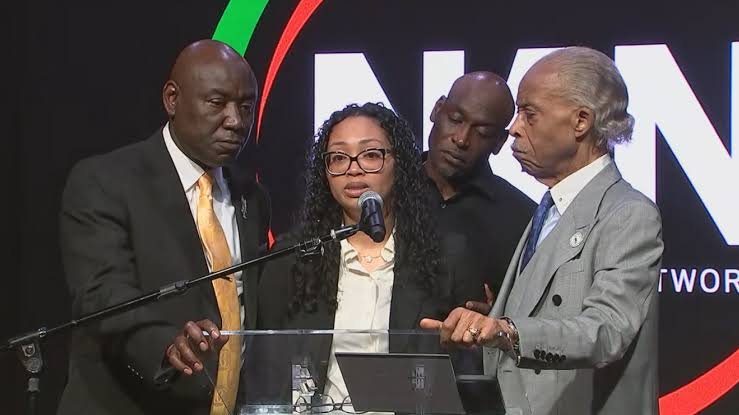
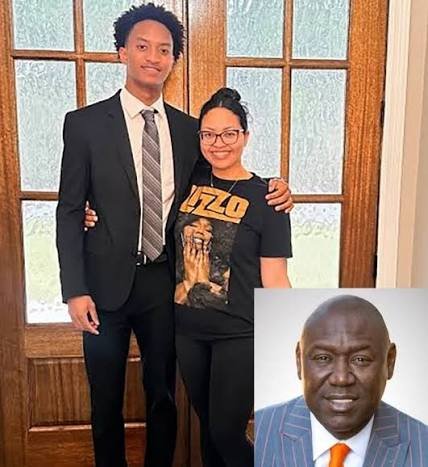
According to Crump, the lack of previous complaints in her career is significant.
A clean professional record does not prevent a legitimate complaint from being filed, but it can provide important context when evaluating how unusual a new complaint may be.
At the same time, the public does not have access to every detail of the underlying complaint or the investigative process.
That makes it impossible to independently determine the motivation behind the report based solely on the statements currently available.
The most responsible approach is therefore to distinguish between established events and interpretations.
The reported complaint happened.
An investigation reportedly followed.
The investigation was closed.
Crump has argued that the complaint was intended to intimidate Nolan’s mother.
Whether that motivation can ultimately be established is another question.
The situation has nevertheless reignited discussion about the pressures facing the Wells family.
Their search for answers has already extended far beyond the original disappearance.
Questions about Nolan’s final hours have generated widespread debate, while reports of threats and hostile messages have added to the family’s concerns.
The combination of grief, public attention and uncertainty has created an environment in which every new development can feel enormous.
For Nolan’s mother, the professional investigation may have felt particularly frightening because her career is part of her idenтιтy and livelihood.
A complaint against a nurse can have serious consequences even when no wrongdoing is ultimately established.
Professional investigations can create anxiety about employment, reputation and future opportunities.
That is why the closure of the matter is an important part of the story.
If no disciplinary action resulted, that does not automatically establish that the complaint was malicious.
But it also does not invalidate the family’s concern about why it happened in the first place.
Those are separate questions.
The first concerns whether professional misconduct occurred.
The second concerns the motivation behind the complaint.
And the third concerns whether the complaint was connected to Nolan’s mother’s public advocacy.
Those questions should not be conflated.
Crump’s statement has brought the third question directly into public view.
As an attorney representing a grieving family, he has argued that the timing and circumstances of the complaint are significant.
His interpretation is that the complaint was designed to create pressure at a moment when Nolan’s mother was demanding answers.
If that allegation were eventually supported by evidence, it could become another troubling chapter in the family’s experience.
But without additional evidence, it remains an allegation.
The broader issue is whether families involved in high-profile investigations should be able to ask difficult questions without facing intimidation or retaliation.
The answer should be straightforward: asking questions is not wrongdoing.
At the same time, public accusations against individuals must be supported by evidence.
Both principles can exist simultaneously.
Nolan’s mother can demand answers while investigators continue examining the evidence.
Her attorney can challenge decisions affecting her.
Authorities can investigate legitimate complaints.
And the public can discuss the case without treating unverified claims as established facts.
That balance is especially important because the Wells case has become highly emotional.
Nolan was only 18.
His family has lost someone who should have had decades ahead of him.
Every unanswered question therefore carries extraordinary emotional weight.
The family’s desire for clarity is understandable.
But clarity requires a careful process.
Investigators must determine what happened based on evidence rather than public pressure.
Regulatory agencies must evaluate complaints based on facts rather than ᴀssumptions.
Attorneys must advocate for their clients while distinguishing legal arguments from established findings.
And the public must resist the temptation to turn every new development into proof of a larger conspiracy.
The anonymous complaint has already become part of the public narrative.
Its significance, however, will ultimately depend on what the underlying records show.
Who filed it?
What exactly did it allege?
When was it filed?
What evidence was reviewed?
Why was an investigation opened?
Why was it closed?
Were any findings made?
And did investigators identify any professional misconduct?
Those are the questions that could provide a clearer picture.
If the investigation ended without findings against Nolan’s mother, that fact should be understood in its proper context.
It would mean the matter did not result in disciplinary action based on the available process.
It would not necessarily prove that the complaint was fabricated.
Likewise, the existence of an anonymous complaint does not prove that Nolan’s mother did anything wrong.
The truth lies in the evidence surrounding the complaint itself.
For now, the strongest confirmed element of the story is that an investigation was reportedly opened and subsequently closed, while her attorney has publicly characterized the complaint as an intimidation tactic.
That distinction matters.
It protects the integrity of the investigation while allowing the family’s concerns to be heard.
Nolan’s mother is not simply a professional being discussed in a regulatory dispute.
She is also a grieving parent.
Her determination to continue seeking answers about her son has become one of the most visible aspects of the case.
She has questioned what happened.
She has challenged narratives she believes do not adequately explain Nolan’s death.
And she has continued speaking despite the pressure surrounding the investigation.
For her, stopping would mean accepting unanswered questions about her son.
That is something she appears unwilling to do.
The closure of the professional investigation may therefore not end the controversy.
Instead, it could lead to additional questions about the circumstances surrounding the complaint.
The family may want to know who initiated it and why.
The public may want to know whether the complaint contained legitimate concerns.
And authorities may eventually need to clarify what can be disclosed about the matter.
Until more information becomes available, however, speculation should not replace evidence.
The Wells case has already demonstrated how quickly a complicated investigation can become surrounded by competing narratives.
A new allegation can trigger thousands of social media posts within hours.
A statement from an attorney can become a headline.
A family member’s concern can be interpreted as proof of a theory.
But none of those things replaces a verified investigative finding.
What Nolan’s family needs most is not another viral controversy.
They need answers.
They need a reliable reconstruction of Nolan’s final hours.
They need credible evidence examined carefully.
And they need to know that people connected to the case can seek information without being subjected to intimidation or harᴀssment.
Whether the complaint against Nolan’s mother was an ordinary professional report or something more deliberate remains an unresolved question based on the information publicly described.
Crump has made his position clear.
He believes the complaint was intended to silence her.
The family believes the circumstances deserve scrutiny.
Now, the evidence surrounding the complaint will determine how that claim should ultimately be understood.
For Nolan’s mother, however, the motivation behind the complaint may be only one part of a much larger fight.
She is still a mother grieving her son.
She is still asking what happened.
And she is still waiting for answers that have not yet brought the closure her family desperately wants.
Whatever the final findings in Nolan Wells’ case may be, the family’s search for the truth continues.
And as new developments emerge, the most important question remains the same: what happened to Nolan, and will the investigation finally provide his family with the answers they have been demanding?